Late 2024. The CEO of one of America’s largest health insurers is shot dead outside a Manhattan hotel. What followed wasn’t just shock — it was a wave of online celebration. Nearly 40% of Americans under 30 called it understandable.
That’s not a fringe reaction. That’s a cultural signal about how fed up people are with the system.
We get it. We work in this industry every day. We see the denied claims, the prior auth delays, and the premiums that climb every year while deductibles go up right alongside them. The frustration is real and legitimate.
But here’s what’s getting buried in all the noise: the American health insurance system is quietly delivering more than it gets credit for — and it’s changing faster than the headlines suggest.
The Scale of What Health Insurance Actually Does
The US healthcare system is the largest single enterprise in the country — possibly in the world. Every day, it pays for cancer treatments costing $400,000 a year, organ transplants, NICU stays, and specialty biologics. It absorbs costs that would financially wipe out most families.
It does that for 165 million working Americans, plus tens of millions more on Medicare and Medicaid. That part rarely makes the news.
What’s Actually Changing in Health Insurance for Employers in 2026
Here’s what most people aren’t talking about — and what every employer offering benefits should know.
Prior Authorization Is Finally Being Cut
After years of doctors and patients raising alarms about delays and denials, the industry responded. Every major carrier — UnitedHealthcare, Aetna, Cigna, Humana, Elevance, Blue Cross — made formal commitments to overhaul the process.
UnitedHealthcare alone is eliminating prior authorization requirements for 30% of services by end of 2026, including outpatient surgeries, echocardiograms, and chiropractic care. Industry-wide, an 11% reduction has already been achieved, with over 15% cuts in Medicare Advantage. Real-time approvals are coming. This is real, measurable progress.
Medicare Seniors Can Now Access Weight-Loss Drugs for $50/Month
Starting July 1, 2026, CMS is launching the Medicare GLP-1 Bridge — giving eligible beneficiaries access to Wegovy, Zepbound, and similar medications for a $50 monthly copay through December 2027. These are drugs with list prices over $1,000 a month, with documented results for obesity, cardiovascular disease, and diabetes. The government is covering the gap.
Insulin Is Now Capped at $35
As of January 1, 2026, large group insurers must cap insulin copayments at $35 for a 30-day supply. For millions of people managing diabetes, that’s immediate, tangible relief.
IVF Is Now a Covered Benefit in California
Employers with 100 or more employees in California are now required to include fertility treatment in their health plans. This is a benefit that used to cost families $20,000 to $50,000 out of pocket — now part of the standard package.
Drug Pricing Is Finally Being Challenged
Medicare’s drug price negotiations are projected to save the program $6 billion per year while cutting enrollees’ out-of-pocket costs by $1.5 billion annually. Meanwhile, Cost Plus Drugs, GoodRx, and Amazon Pharmacy are forcing real pricing transparency into the market for the first time. Consumers can often pay less than their copay going direct — and that pressure is only going to grow.
The Honest Part
None of this means the system is fixed. Costs are still rising fast. Premiums for family coverage now average close to $27,000 a year. Deductibles have more than doubled over the past decade.
The ACA individual market is also in transition. Enhanced subsidies that expired at the end of 2025 are being replaced by plans with higher deductibles, lower benefit caps, and more stripped-down options designed for younger, healthier people who primarily need catastrophic coverage. These aren’t perfect solutions — but they represent the market trying to create options that more people can actually afford.
What This Means for Your Business
If you’re a business owner offering benefits, you’re living with this cost pressure in real time. The good news is that most employers haven’t fully explored the real strategies available to them.
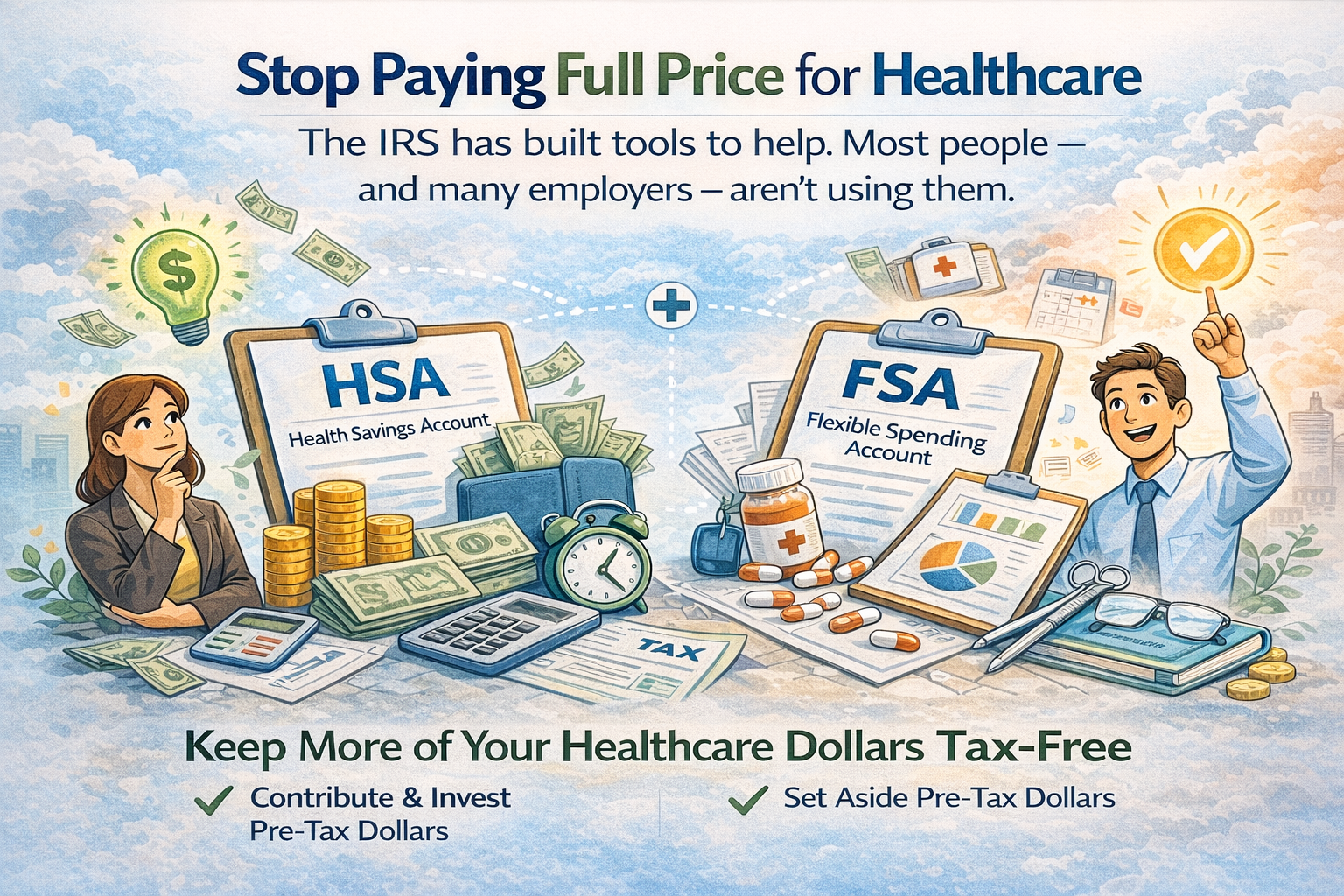
Level-funded plans sit in the middle ground between fully insured and self-funded, often delivering significant savings for groups that stay healthy. High-deductible structures paired with employer-funded HSAs create pre-tax savings that lower net cost for both employer and employee. ICHRA arrangements give employees individual premium reimbursements with more flexibility. And there are IRS pre-tax tools that most companies simply leave on the table entirely.
The system is expensive and imperfect. But it’s also changing — faster than the headlines suggest. Before you simply renew as-is, it’s worth understanding what you’re actually getting and what your options really are.
Let’s Talk About Your Benefits Strategy
We work with small and mid-sized businesses across Southern California every day on exactly these questions. If you want a second opinion on your current plan — or just want to understand what’s available — reach out at Info@CorpStrat.com. We’re happy to take a look and help you find a better path forward.