For years, employers have been told the same story:
Healthcare costs are rising. Premiums are increasing. There’s not much anyone can do.
And so, year after year, many businesses have done what felt reasonable: absorb part of the increase, raise employee contributions a bit, adjust deductibles, increase copays, and move forward.
But something important has changed.
Employees are beginning to feel that although their benefits technically still exist, they are getting less value from them.
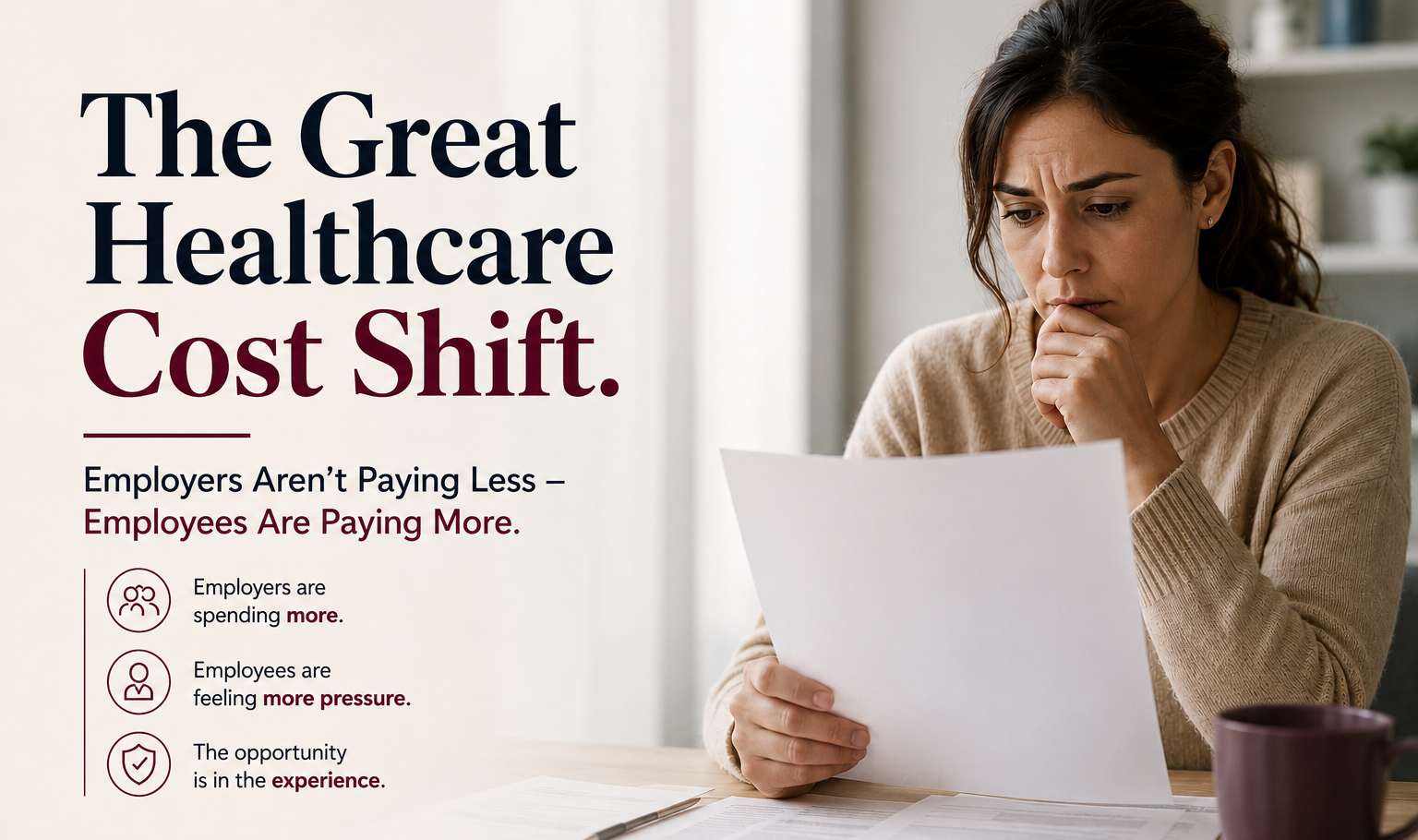
That’s because healthcare costs haven’t disappeared — they’ve simply shifted.
The New Reality: Cost Sharing Has Become Cost Transferring
Employers are still spending significant dollars on employee benefits. In many cases, six or seven figures annually.
But employees often experience something very different:
- Higher payroll deductions
- Larger deductibles
- Bigger out-of-pocket maximums
- More narrow provider networks
- More prior authorizations
- Greater prescription complexity
From an employee’s perspective, it can feel like paying more for less.
And when employees don’t understand what their employer is contributing, benefits stop feeling like a benefit and start feeling like another bill.
Why This Matters More Than Employers Think
Most employers still view healthcare as an expense.
Employees increasingly view it as compensation.
That gap creates problems:
- Lower appreciation for employer investment
- More complaints during open enrollment
- Increased turnover risk
- Reduced employee satisfaction
- Greater pressure on wages
Ironically, many employers are spending more than ever while employees feel less supported than ever.
That’s not because employers are failing.
It’s because the way benefits are delivered and communicated hasn’t kept pace with reality.
The Companies Winning Right Now Aren’t Necessarily Spending More
The employers seeing stronger employee engagement aren’t always the ones buying richer plans.
They’re doing a few things differently:
1. They explain the value
Employees often have no idea what their employer actually pays.
2. They design intentionally
Not every increase should automatically become a higher deductible.
3. They communicate year-round
Benefits should not appear once a year during open enrollment.
4. They give employees tools
Decision support, enrollment assistance, videos, digital guides, and real people still matter.
5. They think beyond medical
Voluntary benefits, financial wellness, Medicare education, long-term care awareness, and protection planning all play a role.
A Better Question for Employers
Instead of asking:
“How do we reduce our healthcare spend?”
Try asking:
“How do we make employees feel more protected for every dollar we already spend?”
Healthcare costs may continue to rise.
But employers still have choices in how they structure, communicate, and maximize those dollars.
And sometimes the biggest opportunity isn’t lowering the cost.
It’s helping employees actually feel the value.