For decades, employee benefits followed a predictable formula: health insurance, dental, vision, maybe a 401(k), and a few fringe perks.
But today’s workforce is different and their expectations are evolving faster than traditional benefits programs can keep up.
Employers are now competing not just on salary, but on quality of life. Workers want benefits that actually impact their daily lives: wellness, family support, mental health resources, personal development, and flexibility.
That’s where a new category of benefits platforms like JOON is gaining traction.
What Is JOON?
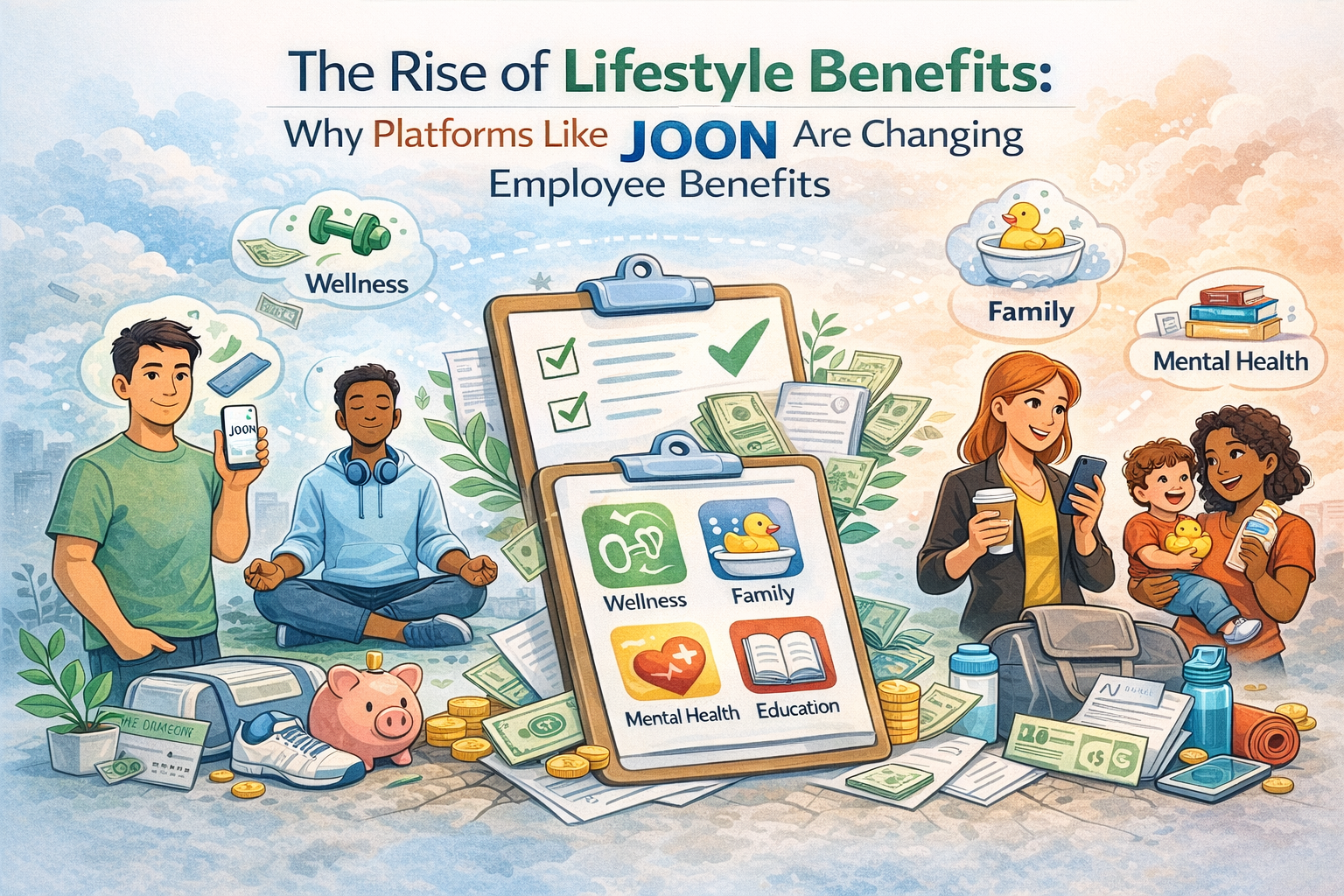
JOON is a flexible lifestyle benefits platform that allows employers to provide employees with personalized wellness and lifestyle benefits through a reimbursement model. Instead of offering one-size-fits-all perks, companies can give employees a monthly allowance that can be used across categories such as fitness, education, family care, or mental health. (Capterra)
Here’s what makes the model different.
Employees simply connect their personal credit or debit card to the platform, make eligible purchases, and the system automatically verifies and reimburses them no paperwork or complicated claims required. (JOON)
The result is a benefits experience that feels more like everyday life than traditional HR administration.
Why Employers Are Paying Attention
One of the biggest challenges employers face is benefit utilization.
Companies spend significant money on programs that employees either don’t understand or rarely use.
Platforms like JOON flip that equation.
With a reimbursement-based structure, employers only pay for benefits that employees actually use, rather than distributing stipends that may or may not serve their intended purpose. (JOON)
That creates a powerful feedback loop:
- Employees choose benefits that matter to them
- Employers fund only real usage
- Engagement increases
- Retention improves
For employers trying to make benefits dollars work harder, that’s an appealing model.
Benefits That Reflect Real Life
Traditional benefits programs tend to reflect what employers think employees need.
Lifestyle benefits reflect what employees actually want.
Through platforms like JOON, employers can create categories such as:
- Fitness and wellness
- Mental health support
- Professional development
- Healthy food and nutrition
- Family and childcare
- Commuting or transportation
- Pet care
- Continuing education
This flexibility is important because today’s workforce spans multiple generations, lifestyles, and priorities. One employee may value a gym membership while another prefers childcare support or online learning.
Lifestyle benefits allow both to feel supported without forcing employers to manage dozens of separate programs.
A Simpler Experience for HR
Another advantage is administrative efficiency.
Traditional reimbursement programs often require HR teams to manually review receipts, answer employee questions, and track eligibility.
Modern benefits platforms automate much of that work by integrating with payroll and HR systems and automatically categorizing eligible purchases. (Forma)
In many cases, HR teams can manage the entire program with minimal monthly oversight.
Why This Matters for Recruitment and Retention
The competition for talent has shifted dramatically over the past decade.
Today’s employees increasingly evaluate companies based on culture, flexibility, and lifestyle support, not just compensation.
Lifestyle spending accounts and flexible benefits are becoming an important tool for employers trying to:
- attract talent
- improve engagement
- support employee wellbeing
- differentiate themselves from competitors
Companies using flexible lifestyle benefit platforms report significantly higher participation rates compared with traditional point-solution benefits. (Justworks)
That’s because employees see these benefits as personal, flexible, and meaningful.
The Bigger Trend
The emergence of platforms like JOON reflects a broader shift happening across employee benefits.
Benefits are moving away from rigid, one-size-fits-all programs and toward personalized experiences that support the whole person.
Employers who adapt to this shift are more likely to create workplaces where employees feel supported, valued, and engaged.
And in a labor market where talent has choices, that can make all the difference.